We coordinate a set of research projects that work on different aspects of the system - from the pollution sources and treatment processes to water use policy and guidelines. The projects work together and share information and learning towards a comprehensive understanding of the system and the best ways to move forward.
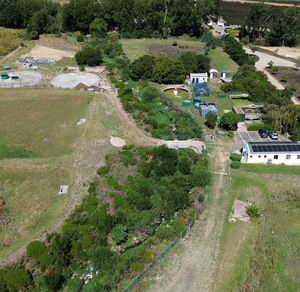
The river Stiebeuel River that bisects the site has been restored with indigenous vegetation.
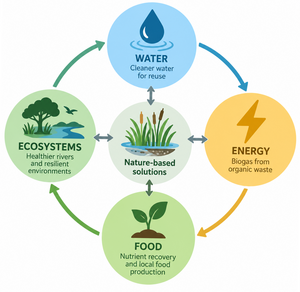
Nature-based water treatment coupled with energy recovery (biogas from organic waste) and food production, demonstrating an integrated, circular "Water-Energy-Food-Ecosystems" approach in a peri-urban setting. Project implemented with the Technical University of Munich and supported by the Bavarian State Ministry.
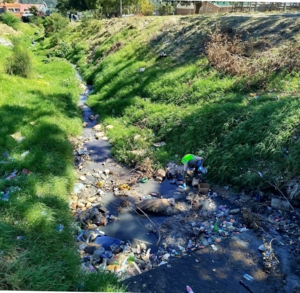
The NEUWater project aims to develop concepts for integrating greywater and stormwater recycling within dense, informal low-income urban communities. Implemented with the HafenCity University and supported by the Federal Ministry of Education and Research (GMBF).
The WaterSENS project aims to demonstrate the benefits of decentralized water management technologies and provide a decision framework to help water authorities use these systems.
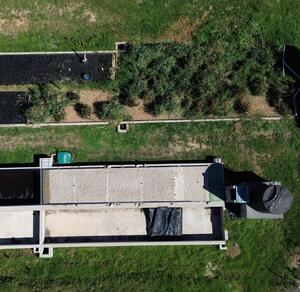
The bio-filters are the initial treatment, they act as a wetland to clean the polluted water extracted from the Stiebeuel River. Many have contributed to the development of these treatment cells.
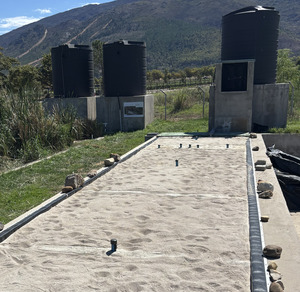
The sequential management aquifer recharge treatment (SMART) has been add as a polishing process to ensure remaining contaminants to be removed from the bio-treated river water. This project is led by the Technical University of Munich.
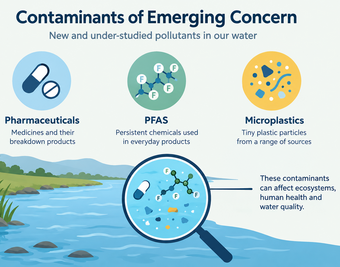
this project explores how nature-based systems can remove emerging contaminants from water. Research at the Franschhoek and Stiebeuel rivers and Water Hub combines monitoring and treatment trials to inform practical water-quality management and policy using a One Health approach. Project supported by the WRC.
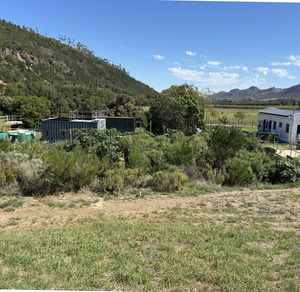
This project investigates how contaminants of emerging concern (CECs) in surface water, groundwater, and alternative irrigation sources affect small-scale agriculture in peri-urban catchments to inform safer water use and reuse guidelines. Project supported by the South African Water Research Commission.
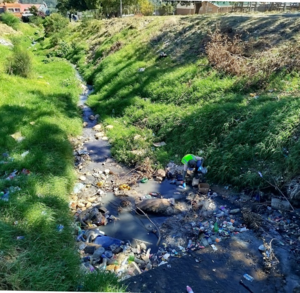
This work examines the efficacy of full-scale biof-iltration systems in mitigating antiretroviral drugs (ARVDs) present in contaminated surface water runoff from an informal settlement.
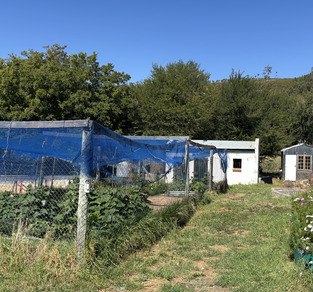
A gardening experiment included using four water sources (river, Biofilter water, SMART water, municipal) to compare growth
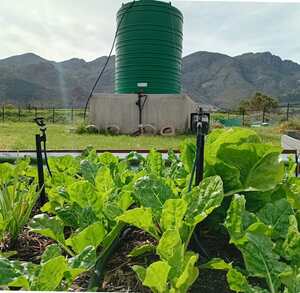
The water from the treatment train is released back into the river or reused for irrigation. The garden/farm, with seedling nursery, contributes to multiple of the projects run at the Water Hub.
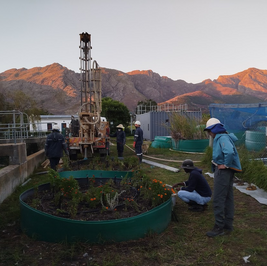
We are monitoring boreholes across the site in order to study the interaction between the surface water and the ground water.
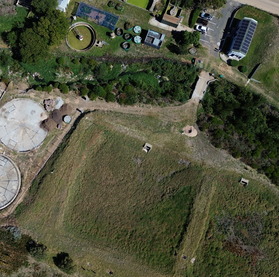
The maximum through put of the system is roughly 36kl/day - this is a large experiment. The treatment goal for the site is 1000kl/day - we have the space, we need collaborators.
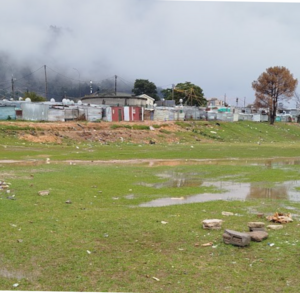
Negotiations with stakeholders and system designs are underway with Stellenbosch Municipality for a small nature-based treatment facility in Langrug informal settlement to generate soccer field irrigation from polluted storm-water.
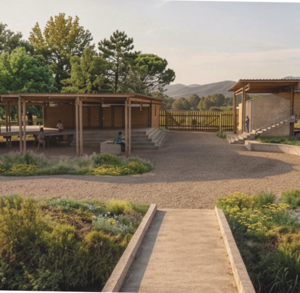
Very early plans are being generated to explore the establishment of a learning centre and laboratories at the Water Hub. Planning is being done in collaboration with architecture students from the Technical University of Munich under Francis Kéré.
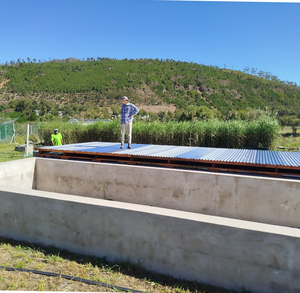
The sequential management aquifer recharge treatment (SMART) system (read above) is set to be expanded through increasing the size of the system.
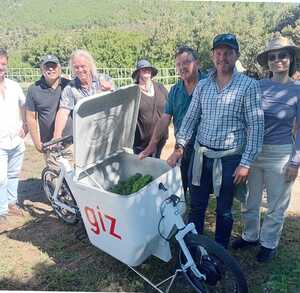
With the arrival of the biodigester, the need for resource transport will increase. E-bikes present one potential solution to the challenge.